RESEARCH · 02 CULTURAL SPECIFICITY

Teaching AI to Read
Historical Form

Digital reconstruction of historical qipao silhouettes using era-specific low-rank adaptation (LoRA) models.

Year2025-2026
RoleResearcher · dataset curation · LoRA fine-tuning
StatusOngoing · Manuscript in submission
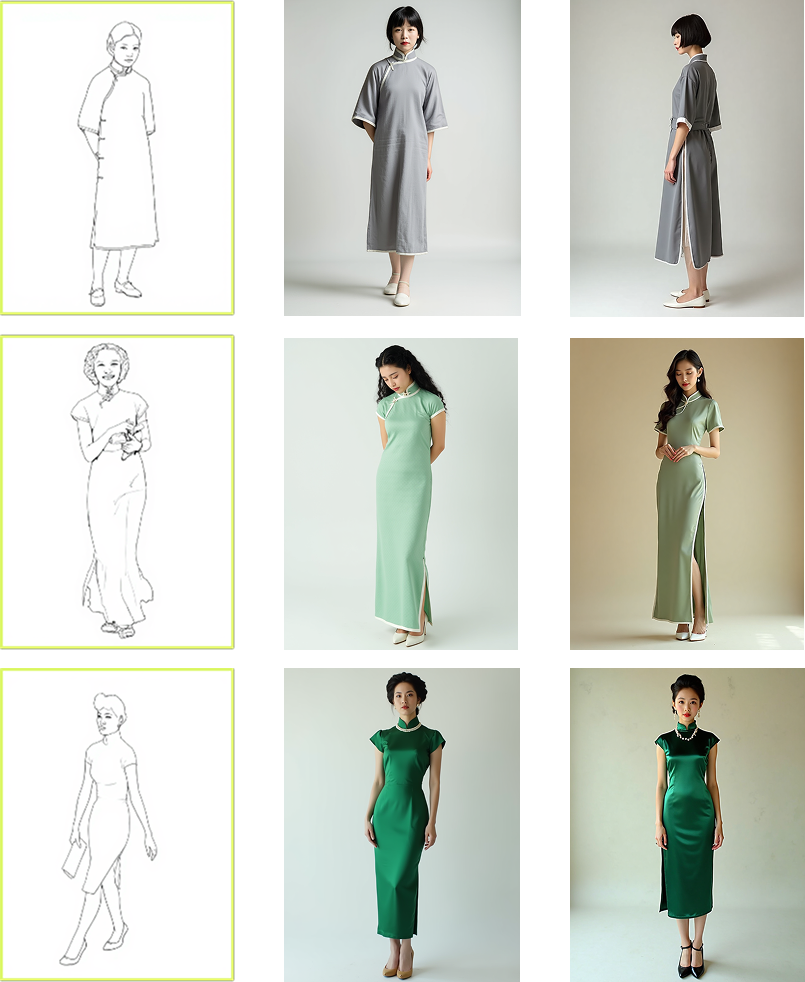
Three historical line drawings compared with outputs from the base model plus LoRA and the base model alone
Left: historical line art. Centre: base model with an era-specific LoRA. Right: base model alone. Targeted fine-tuning produces a more accurate reading of authentic garment silhouettes.

Context

Qipao is one of the most representative forms of Chinese national dress, yet generic image-generation models often collapse its history into one stereotyped silhouette.

Research question

How can AI image models learn the historical evolution of qipao silhouettes—and support culturally grounded reinterpretation rather than flattening them into stereotypes?

The study tests whether domain-specific curation and targeted fine-tuning can recover historically meaningful macro forms instead of repeating the same generic modern pattern across every period.

02 · Method and dataset

A method for separating historical form from surface appearance.

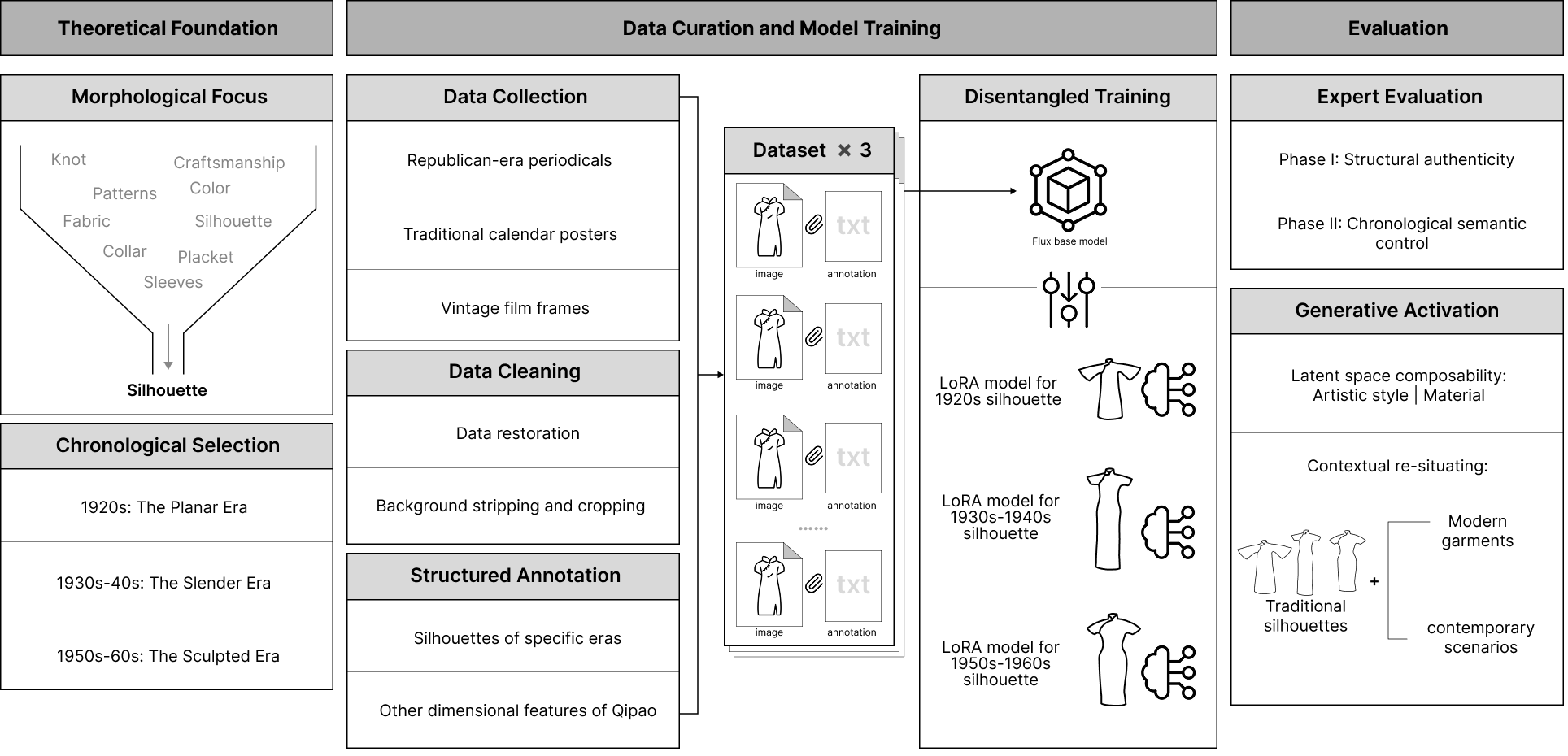
Research method linking morphological focus, historical data curation, three era-specific LoRA models and expert evaluation
The method moves from a morphological focus and chronological selection to data curation, disentangled training, expert evaluation and generative transfer.

A chronological dataset built around silhouette.

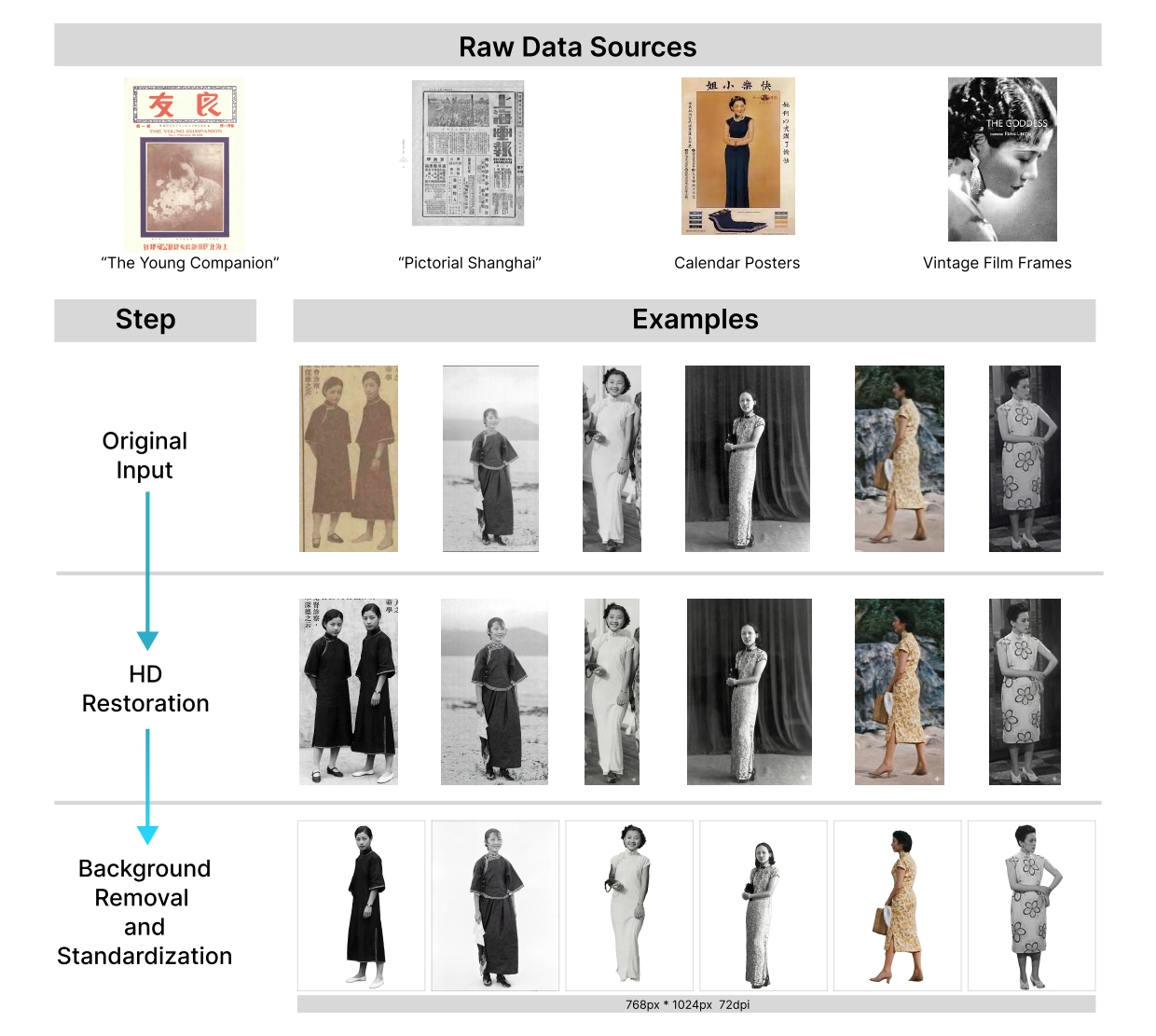
Historical qipao data sources and the restoration, background removal and standardisation process
Historical photographs, periodicals, calendar posters and film frames were restored, isolated and standardised before annotation.
188historical images
511920s
691930s-1940s
681950s-1960s

Structured annotation system

Shared garment attributes and era-specific silhouette cues were encoded as separate but connected layers.

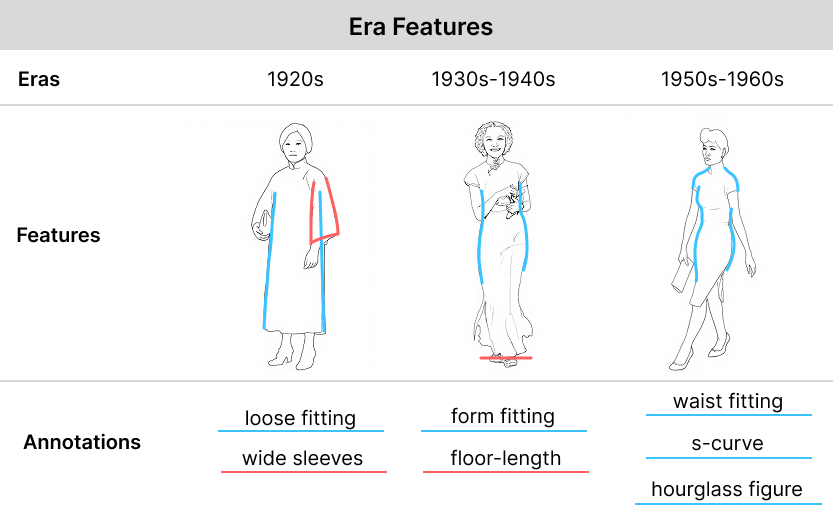
Era-specific silhouette annotations for the 1920s, 1930s-1940s and 1950s-1960s
Era-specific tags encode the macro silhouette cues used for chronological control.
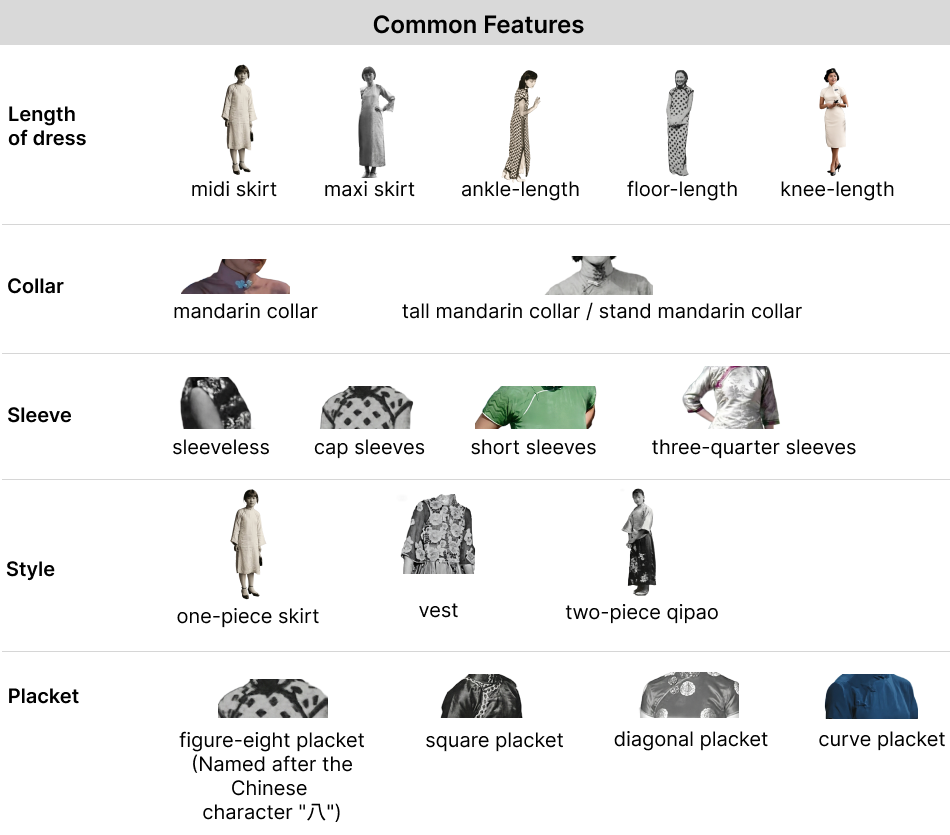
Structured annotation of common qipao features including dress length, collar, sleeve, style and placket
Common-feature tags describe dimensions shared across the archive.

03 · Expert validation

Two blind tests separate structural authenticity from chronological control.

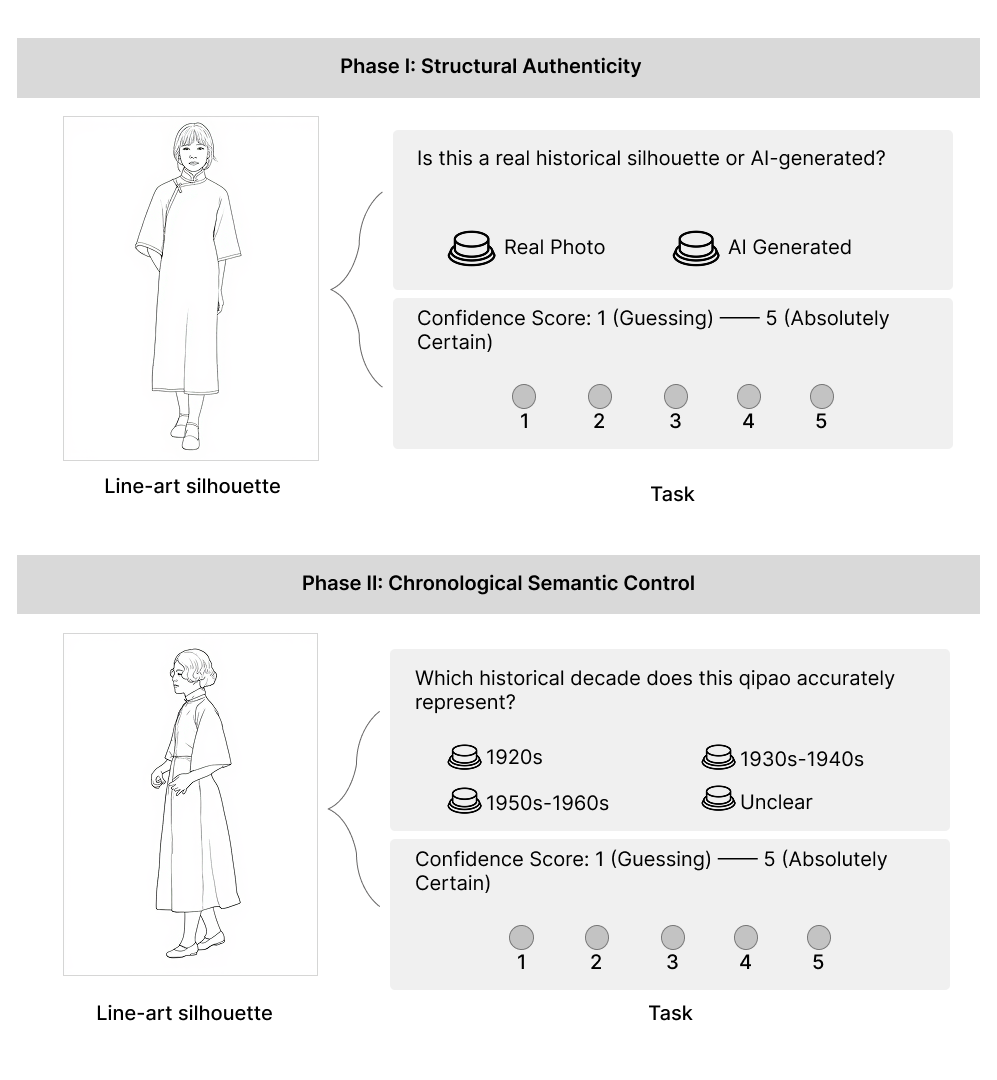
Twelve experts evaluated line-art silhouettes so colour, texture and lighting did not dominate judgements of macro form.

Two expert tasks testing structural authenticity and chronological semantic control
Phase I asks whether a silhouette is authentic or generated. Phase II asks which historical period it represents.
12expert participants
360Phase I judgements from 30 samples
288Phase II judgements from 24 comparisons

Phase I · Structural authenticity

Experts did not reliably distinguish generated silhouettes from authentic line art.

The Yates-corrected chi-square test did not show a statistically significant classification difference (χ² = 1.616, p = .204). When generated silhouettes were misidentified as authentic, mean confidence was 3.72 out of 5.

Fleiss' κ = .028 indicates near-zero systematic agreement. This is evidence of weak discriminability in this task, not proof that generated garments are historically authentic.
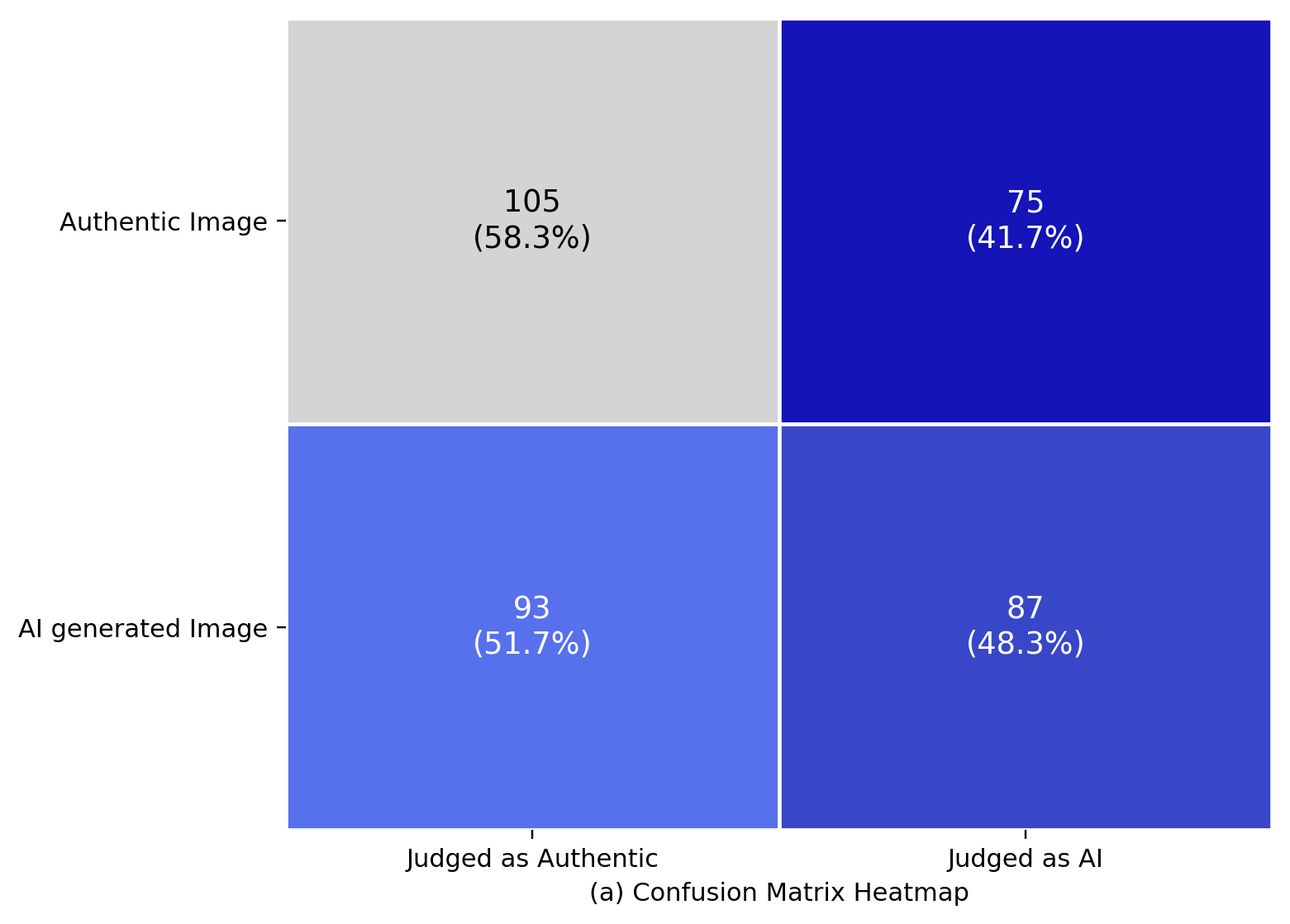
Confusion matrix for authentic and AI-generated qipao silhouettes
Confusion matrix across 360 judgements in the structural-authenticity test.
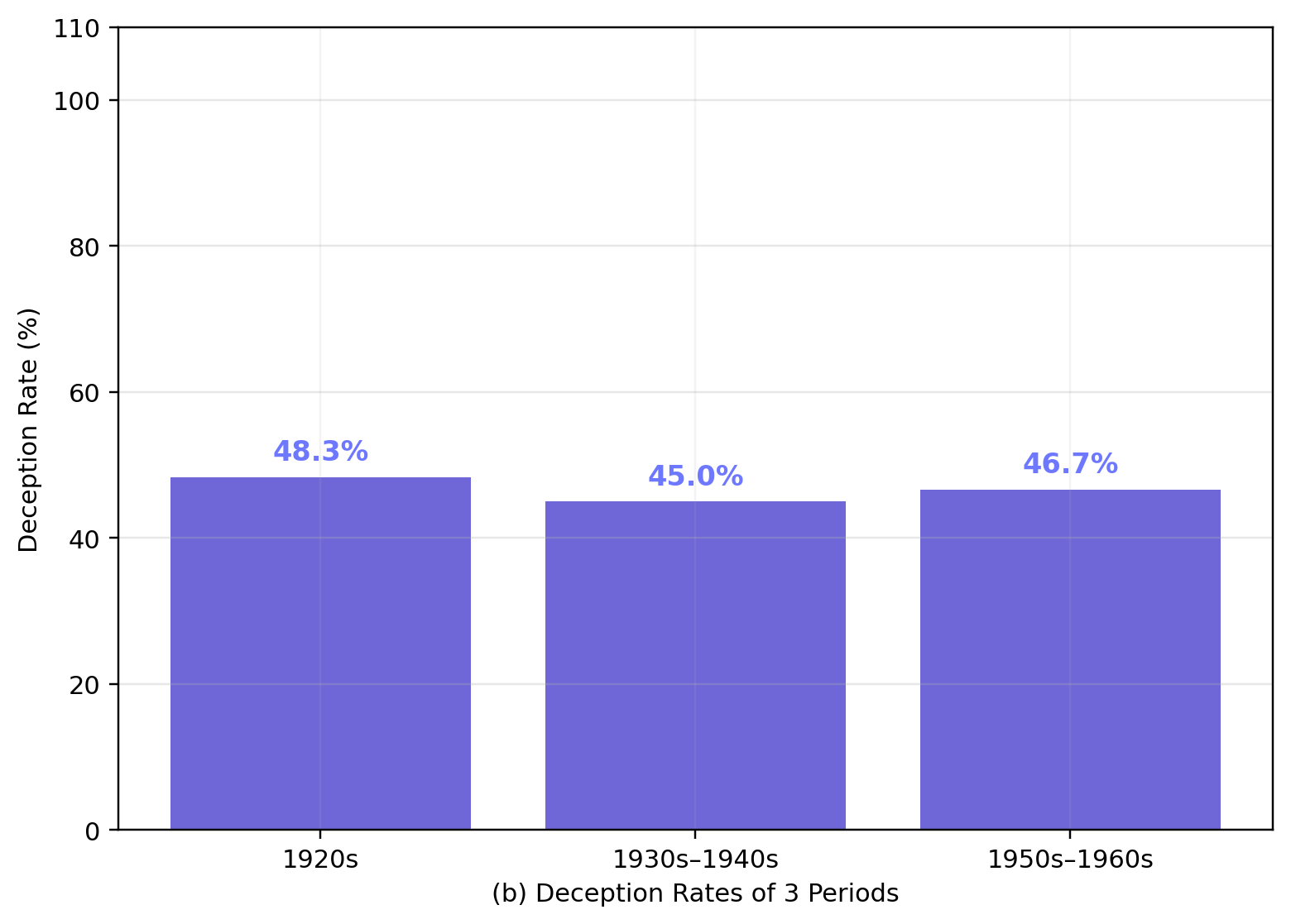
Generated qipao silhouette deception rates for the three historical periods
Misattribution rates remained close across the three historical periods.

Phase II · Chronological semantic control

Era-specific models improved chronological identification accuracy.

The model comparison was statistically significant (χ²(1) = 26.002, p < .001). Overall accuracy increased from 40.3% for the base model to 70.8% with era-specific LoRA models, while average confidence remained similar at 3.90 and 3.93 out of 5.

Chronological identification accuracy by target era
Target eraBase modelBase + LoRA
1920s41.7%62.5%
1930s-1940s22.9%75.0%
1950s-1960s56.3%75.0%
Overall40.3%70.8%
Inter-rater agreement
Evaluation sourceFleiss' κp-valueInterpretation
Authenticity test.028> .05Near-zero agreement
Base model.052> .05Slight agreement
Base + LoRA.784< .001Substantial agreement

04 · Controlled comparison

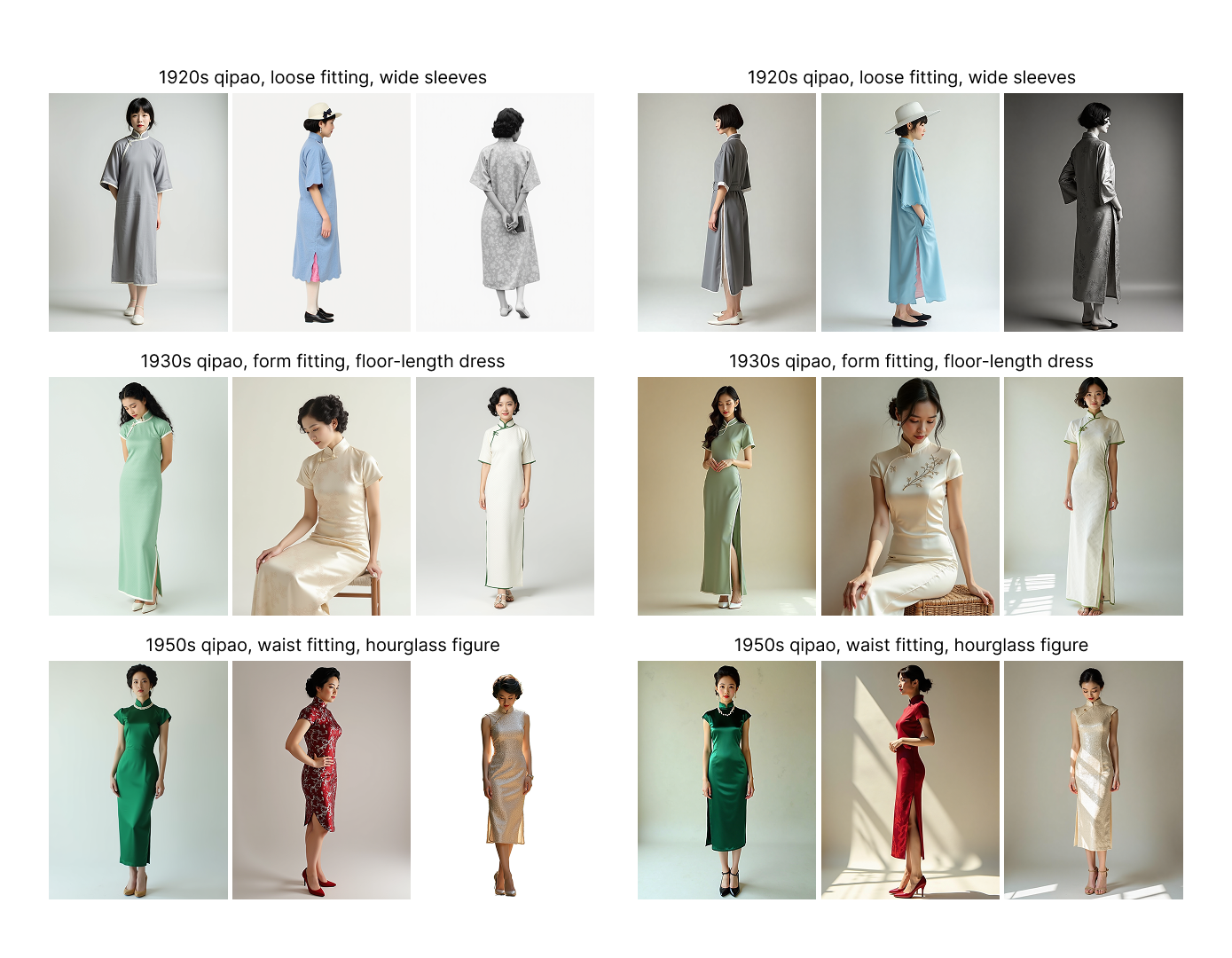
The same prompts expose how fine-tuning changes historical form.

Generated qipao comparisons with the base model plus fine-tuned LoRA on the left and the base model alone on the right
Left: base model with the corresponding fine-tuned LoRA. Right: base model alone. The comparison concerns era-specific macro form rather than garment-construction accuracy.

05 · Transfer and boundary

Silhouette control supports transfer, but it does not encode construction knowledge.

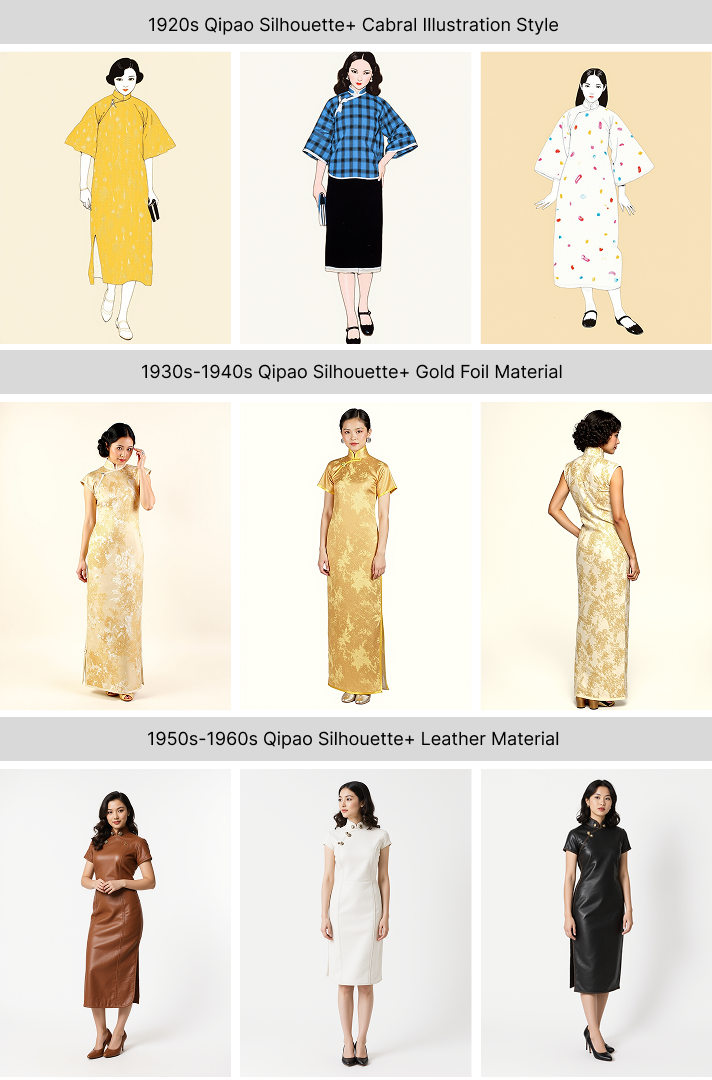
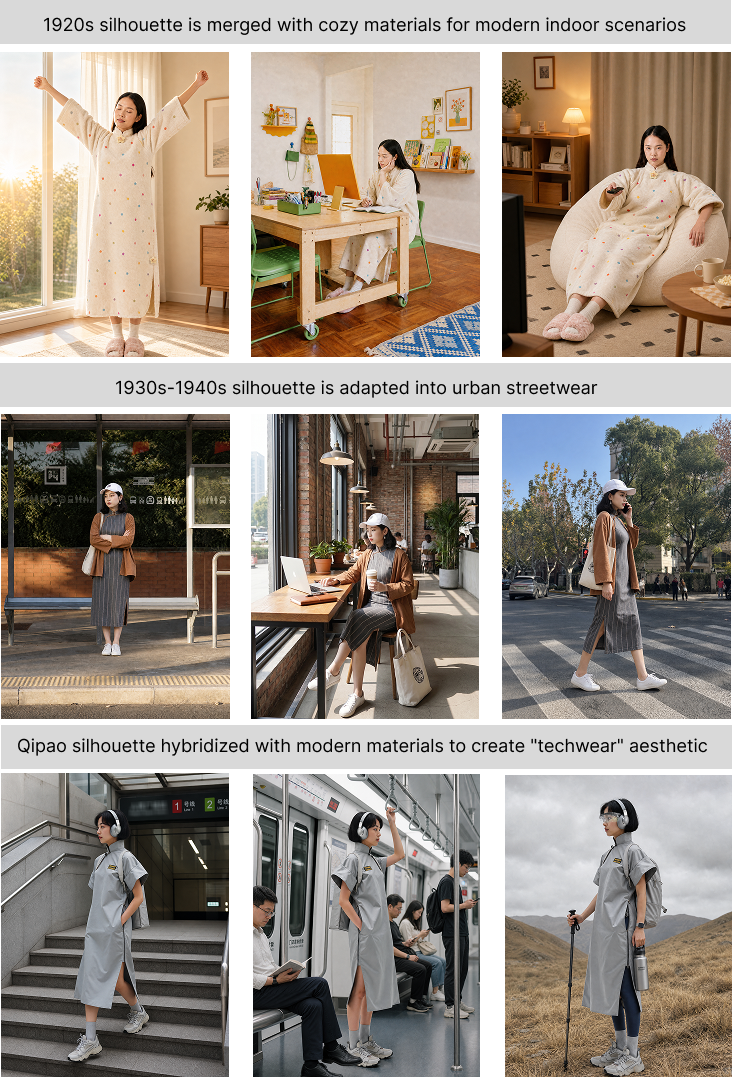
Historical forms were recomposed with illustration styles, materials and contemporary settings. The models still do not reliably encode closure rules, cutting logic, fabric mechanics or three-dimensional construction.

These outputs support exploration and speculative prototyping. They are not manufacturing blueprints.
Historical qipao silhouettes transferred across illustration styles and materials
Historical silhouettes recomposed with illustration styles and material cues.
Historical qipao silhouettes adapted to indoor, streetwear and technical clothing contexts
Historical silhouettes re-situated in contemporary contexts.

Research contribution

From authentic archives to controllable cultural form.

Improved specificity does not equal knowledge of construction, material behaviour or cultural rules. This boundary motivates the next research step: explicit craft grammar and culturally accountable human judgement.

Continue to the research trajectory
  • Structured tagging of authentic archives establishes reliable heritage datasets.
  • Targeted fine-tuning breaks AI stereotypes and yields authentic cultural traits.
  • Model composition enables creative fusion of heritage and modern design.
  • Extends generative AI from 2D surface patterns to macroscopic garment silhouettes.