TEACHING · 02 AIGC DESIGN THINKING

AIGC
Design Thinking

From open-source tool literacy and model selection to controllable generation, LoRA fine-tuning and an integrated design proposition.
ResponsibilityCourse design + full teaching delivery
Duration32 hours
Cohort10 design undergraduates
ContextCore bridge course in an AIGC fashion innovation sequence
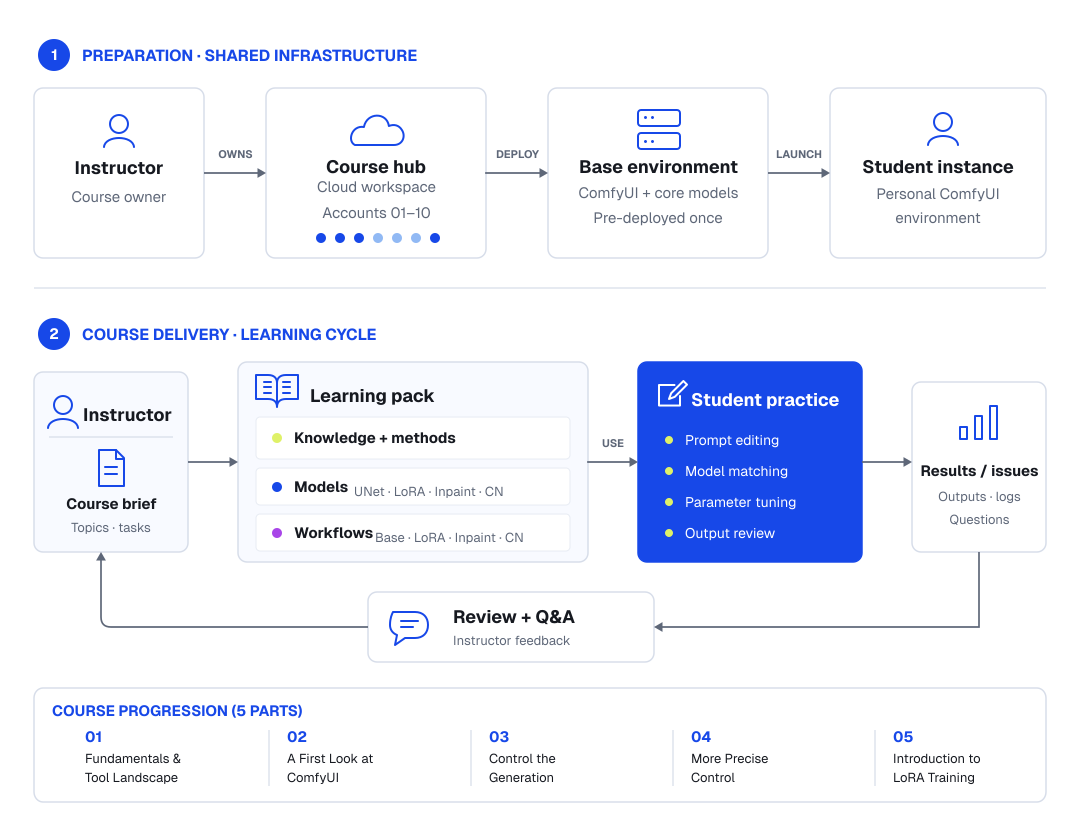
AIGC Design Thinking course operating model showing shared preparation infrastructure, the iterative course delivery cycle and five-part course progression
A course operating model showing how shared infrastructure, learning packs and iterative student practice supported open-source AIGC teaching.

Teaching position

AI expands the design space.
Design thinking decides what deserves to move forward.

Students first use AI to explore broadly without prematurely filtering ideas for feasibility. They then shift from generation to curation, critique and controlled refinement—using professional judgement to determine which possibilities are worth developing and how they can become credible design propositions.

AI does not remove design judgement; it relocates it—from producing options to selecting, testing and resolving them.

01 · Programme context

A bridge between broad AIGC awareness and hands-on realisation.

Course 01 · Orientation 01

AIGC Fundamental & Trend

Map the ecosystem; frame opportunities, limits and ethics.

Broad awareness
Course 02 · Led by Shaw Qin Core bridge course

AIGC Design Thinking

  • Open-tool literacy
  • Model selection / model adaptation
  • Controllable visual generation
  • Image-to-image / ControlNet / inpainting
  • Introductory LoRA fine-tuning
  • Integrated innovative-qipao design proposition
Course 03 · Realisation 03

Fashion Innovation Workshop

Carry the Course 02 proposition into hands-on physical or digital development.

Hands-on development

The three-course sequence is programme context; this case claims responsibility only for Course 02.

Design thinking model

From generating possibilities to judging what is worth making.

  1. 01Explore

    Expand the possibility space

    Use AI’s low-cost visual abundance to generate many directions before judging feasibility.

    Suspend judgement.

    • breadth
    • variation
    • visualisation
  2. 02Curate

    Select what deserves attention

    Read the generated field as a curator: identify ideas that respond to the design brief and contain genuine development potential.

    • relevance
    • potential
    • selection
  3. 03Critique

    Test the image against reality

    Judge AI proposals through disciplinary knowledge rather than visual appeal alone.

    • Does the fabric behave credibly?
    • Can the material form this structure?
    • Could the geometry actually support itself?
    • plausibility
    • material logic
    • disciplinary judgement
  4. 04Refine

    Correct what AI gets wrong

    Use professional judgement to retain useful ideas while correcting form, material logic, proportion and construction.

    Retain what matterscorrect what failsresolve what can develop

    • edit
    • constrain
    • resolve
  5. 05Realise

    Turn potential into a controllable proposition

    Use controllable generation workflows to translate selected ideas into increasingly resolved design proposals.

    Controlled tools
    • ControlNet
    • Inpainting
    • LoRAs
    • Image-to-image
    • Custom workflows

02 · Course pathway

Five parts move from tool orientation and model selection to controllable generation, LoRA fine-tuning and project integration.

  1. 01Part 1
    Topic

    Review of Fundamentals and Tool Landscape

    Learning outcome

    Foundational understanding of the diffusion model and its ecosystem

  2. 02Part 2
    Topic

    A First Look at ComfyUI

    Learning outcome

    The deployment and basic usage of ComfyUI; comprehend the significance and functions of the various parameters.

  3. 03Part 3
    Topic

    Control the Generation

    Learning outcome

    Construction of Prompt; Choice of LoRAs.

  4. 04Part 4
    Topic

    More precise control

    Learning outcome

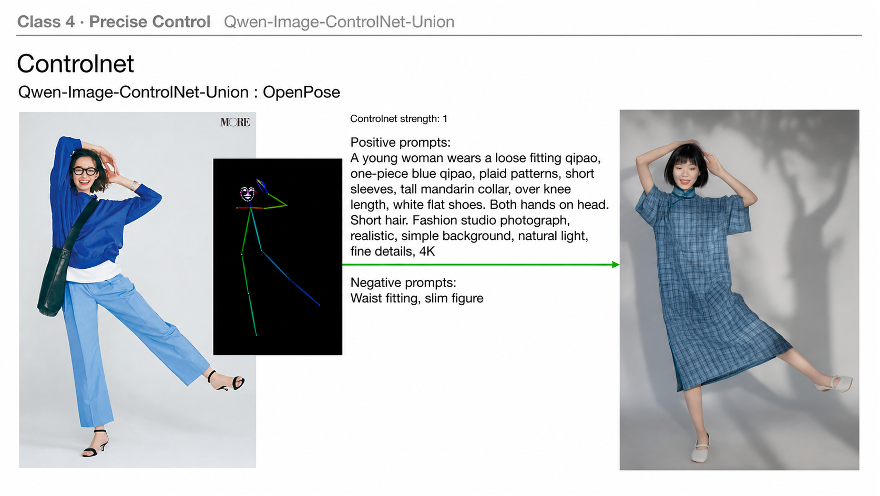
    ControlNet; Inpainting

  5. 05Part 5
    Topic

    Introduction to LoRA Training

    Learning outcome

    Brief of data curation, annotation, training environment

03 · Sample course materials
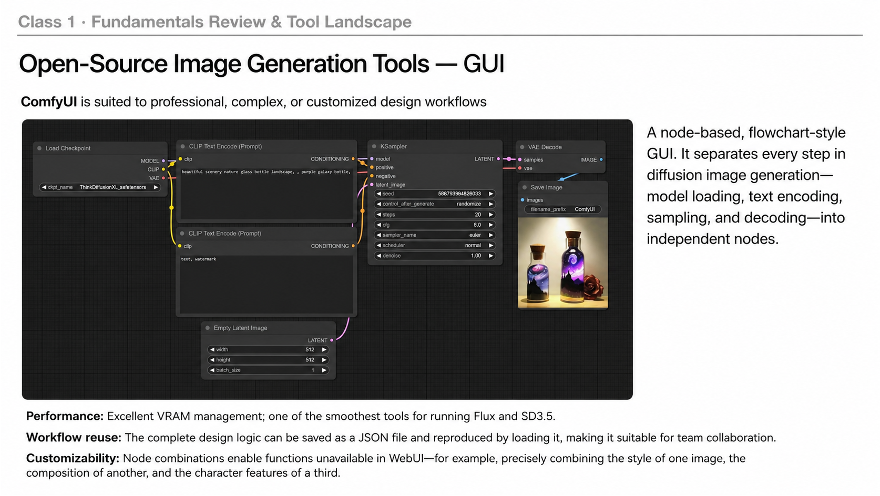
Two examples introduce workflow literacy and controllable generation.

English teaching material explaining a ComfyUI node workflow and parameter relationships
Workflow literacy and parameter relationships.
English teaching material demonstrating ControlNet pose constraints and controllable generation
Controllable generation and spatial constraint.

03 · Teaching support

Expert input and research assets gave students better grounds for judgement.

The course combined external expertise, structured visual references and research-derived models so that generation could be judged against cultural, formal and historical knowledge rather than visual novelty alone.

Expert input

Guest input · Peter Kabel

Guest lectures introduced practical strategies for constructing stronger prompts and, more importantly, for treating AI output as material to be curated rather than accepted. Students were encouraged to compare alternatives, question apparent visual success and use critical judgement to decide which directions deserved further development.
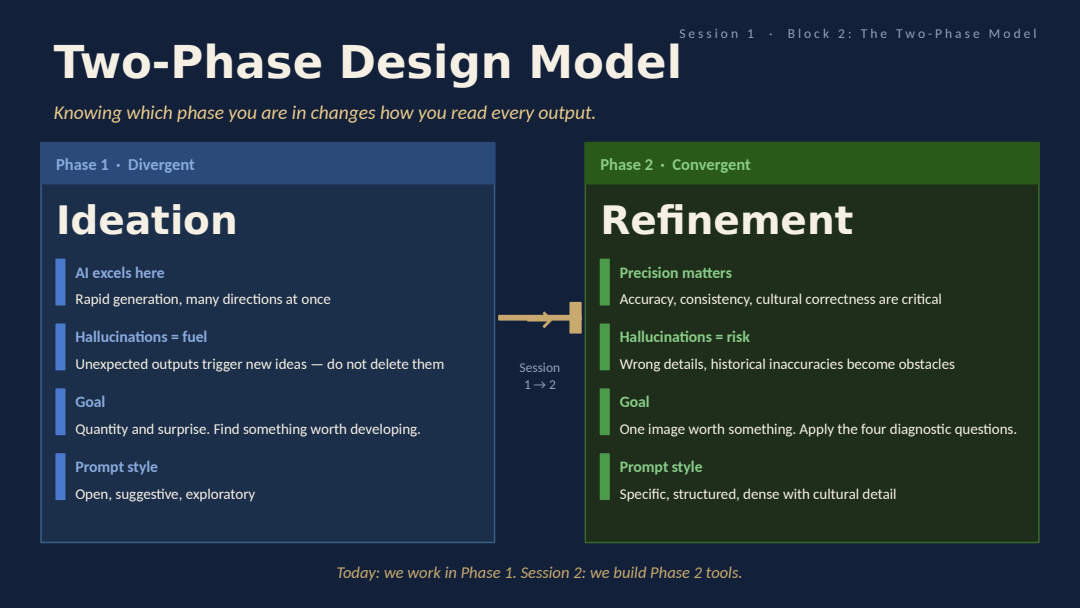
Peter Kabel's Two-Phase Design Model connecting divergent AI ideation with selective refinement
Guest teaching connected divergent AI ideation with a more selective, critical refinement phase.

Structured reference

Qipao Research Database

A searchable qipao image database gave students a structured reference beyond generic web search. Images could be filtered through garment attributes and examined through generated descriptions and object analysis, helping students connect visual references with explicit design vocabulary.

The database could also translate image analysis into prompt-ready language for different generation workflows, providing a bridge between observing qipao characteristics and constructing more precise prompts.
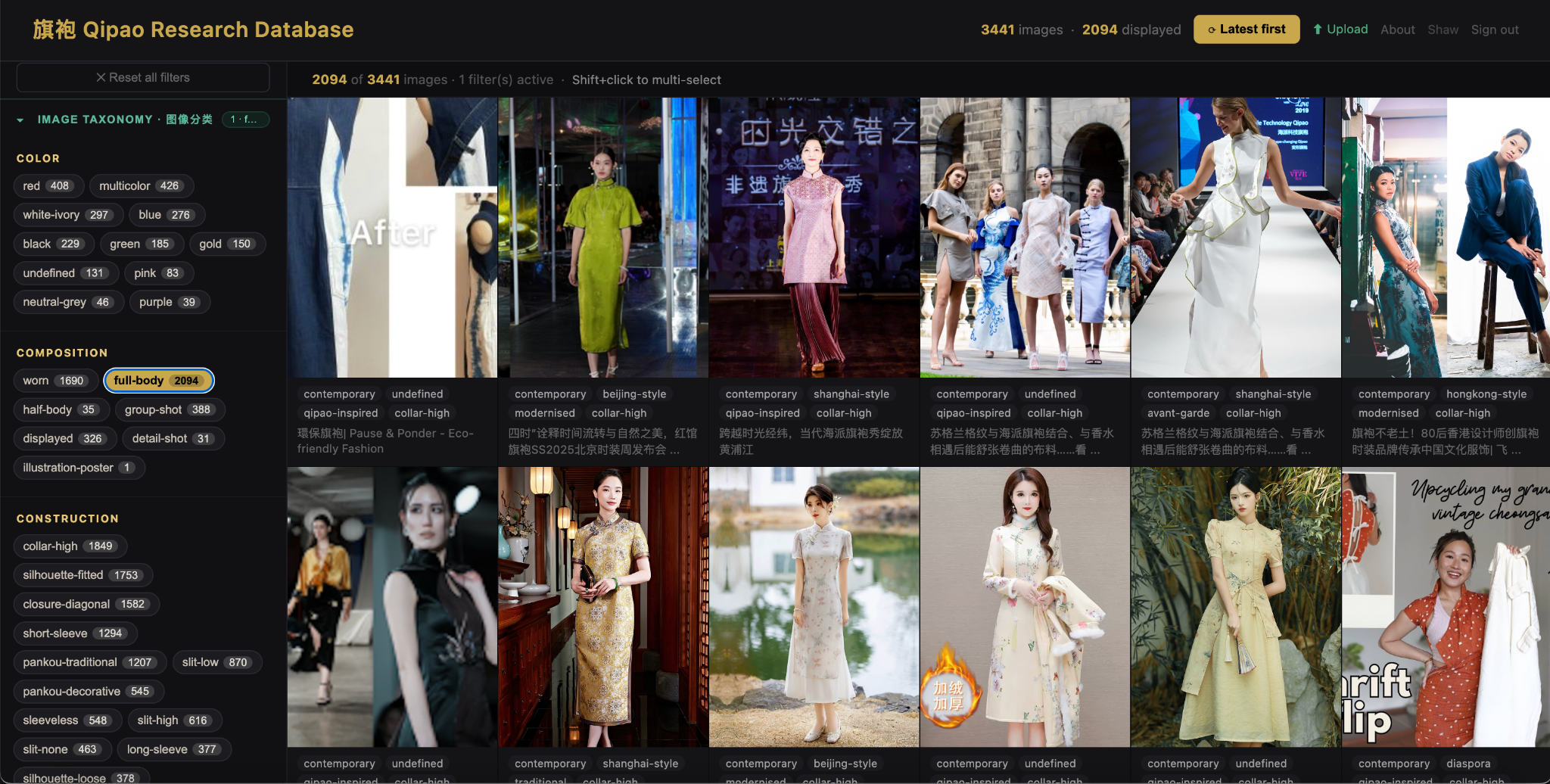
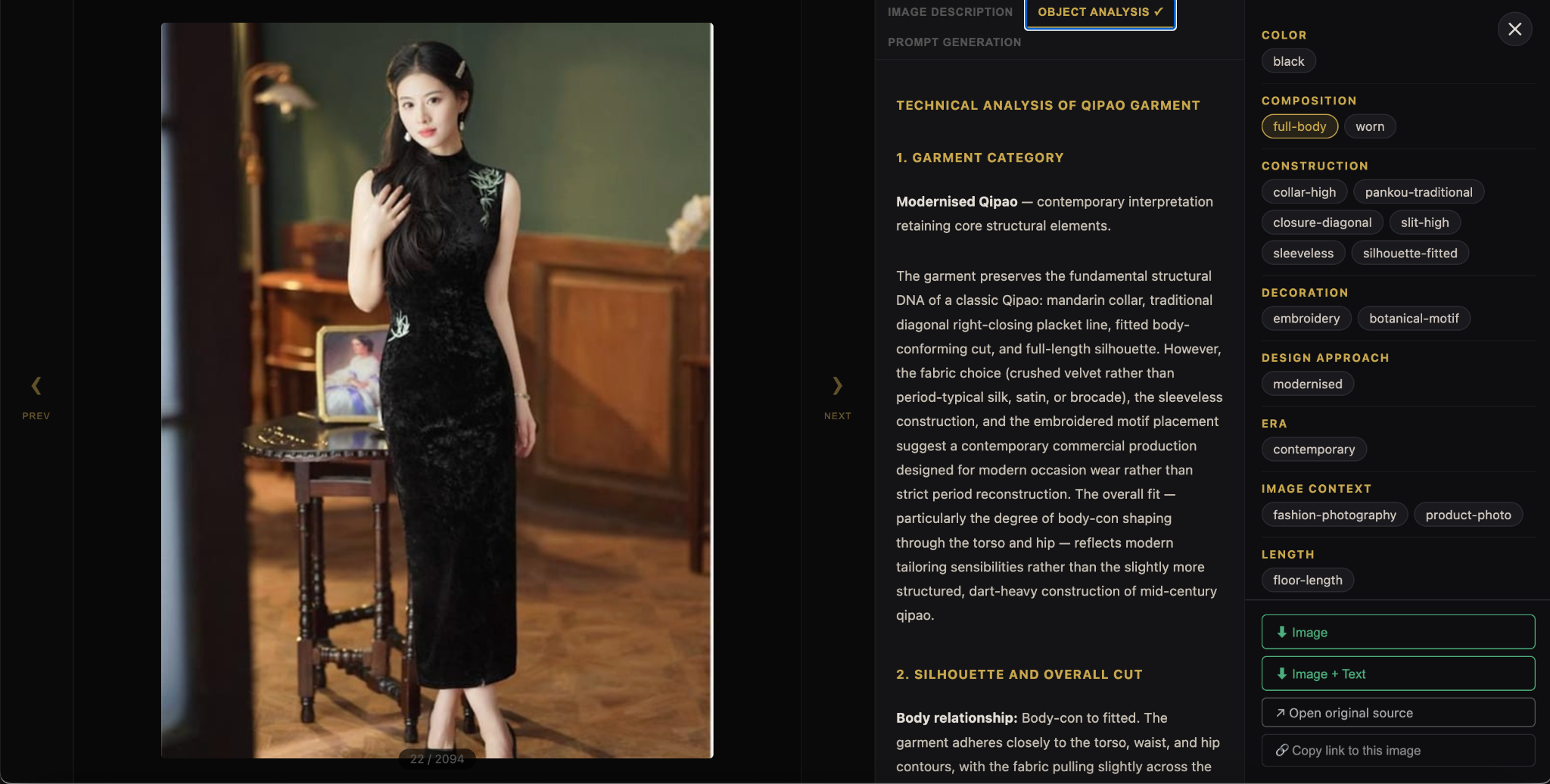
Qipao Research Database browsing view with image taxonomy and garment attribute filters
Searchable visual references organised through colour, composition, construction, decoration and design approach.
Qipao Research Database image detail showing object analysis and garment vocabulary
Image-level analysis turns visual characteristics into explicit garment vocabulary and prompt references.

Research → teaching

Historical silhouette LoRAs as teaching resources

Three historical qipao silhouette LoRAs developed through Research Case 02 were brought into the course as working design resources. They gave students period-specific form references that could be combined with the controllable-generation methods taught in the course.

Rather than treating research outputs as finished artefacts, the course redeployed them as tools for experimentation, comparison and refinement.
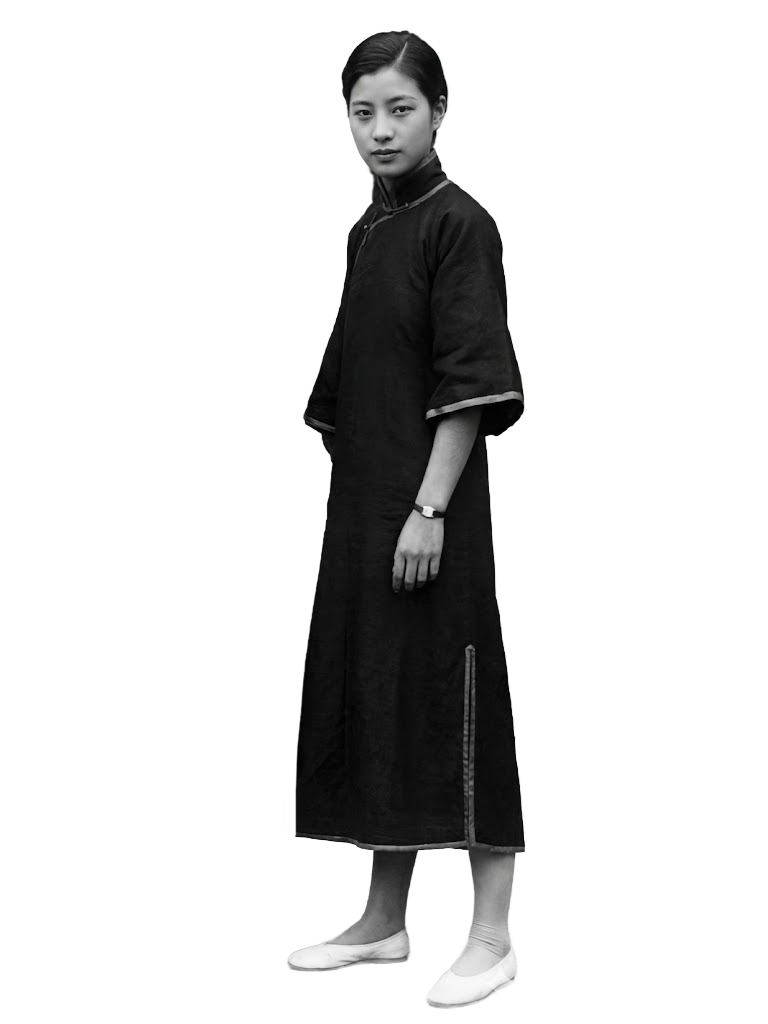
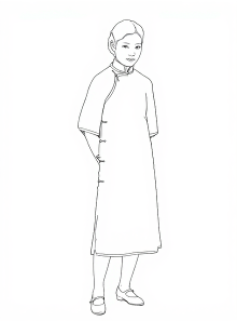
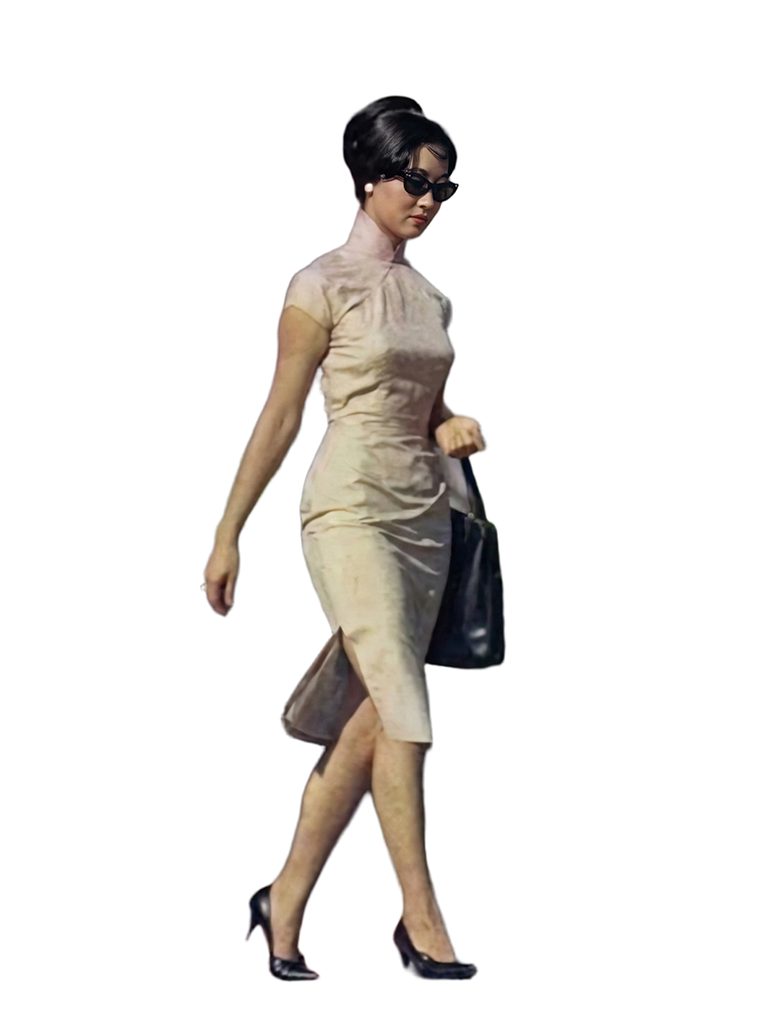
1920s

Historical source
Historical 1920s qipao source photograph
Silhouette abstraction
Clean line-art abstraction of 1920s qipao silhouette knowledge
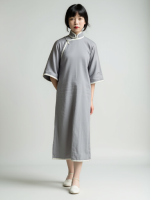
LoRA output
Representative output from the 1920s qipao silhouette LoRA

1930s–1940s

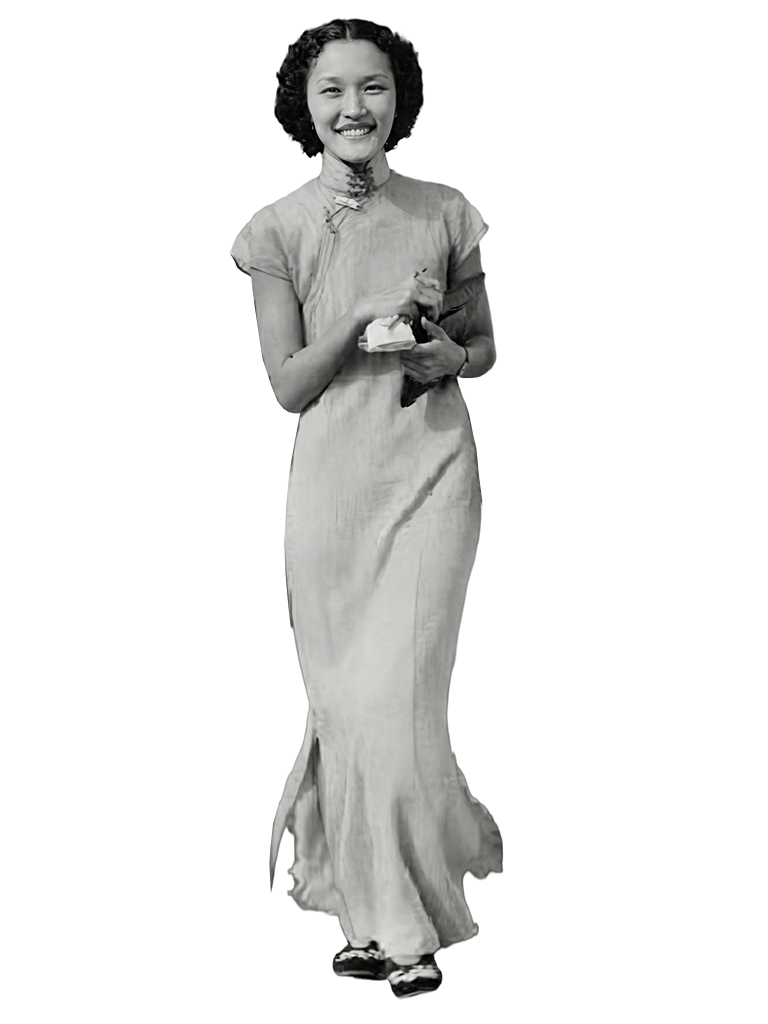
Historical source
Historical 1930s to 1940s qipao source photograph
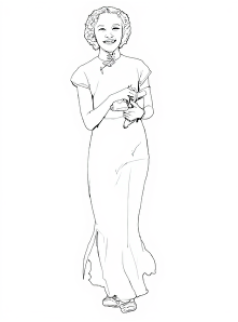
Silhouette abstraction
Clean line-art abstraction of 1930s to 1940s qipao silhouette knowledge
LoRA output
Representative output from the 1930s to 1940s qipao silhouette LoRA

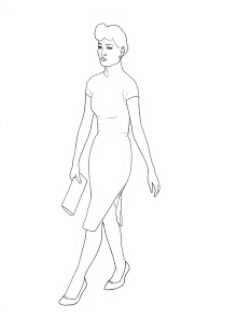
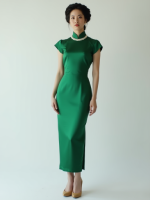
1950s–1960s

Historical source
Historical 1950s to 1960s qipao source photograph
Silhouette abstraction
Clean line-art abstraction of 1950s to 1960s qipao silhouette knowledge
LoRA output
Representative output from the 1950s to 1960s qipao silhouette LoRA
Historical qipao sources were abstracted into silhouette references and translated into LoRA-based teaching resources for period-specific design exploration.

04 · Student proposals

Three design directions translate controllable generation into resolved qipao concepts.

Each group developed an integrated visual proposition through iterative generation, selection and refinement. These concepts form the output of AIGC Design Thinking and are currently being translated into physical outcomes in the subsequent course. Final documentation will be added after fabrication is complete.

Student proposal 01

Sculptural Bloom

Reframes qipao beauty through sculptural volume and tension. Light and shadow, opening and closure, unfold like a flower in bloom.


Close view of illuminated sculptural floral forms unfolding across a qipao
Qipao concept shaped by sweeping sculptural white volume

Student proposal 02

Living Bloom

Makes vitality and emotion visible through cool violet light, mint green and white florals. Light traces the vines, turning a formal gown into a breathing, growing surface.
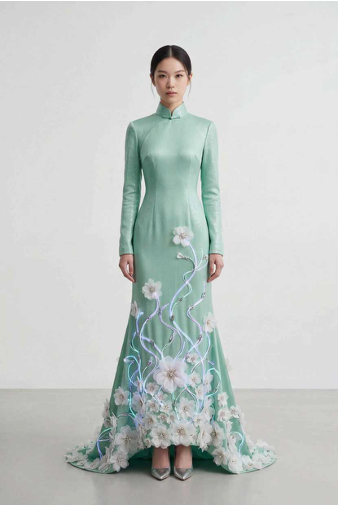
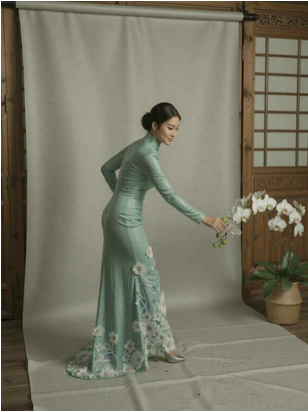
Front view of a mint green qipao with white florals and illuminated violet vines
Context view of the mint green floral qipao proposal

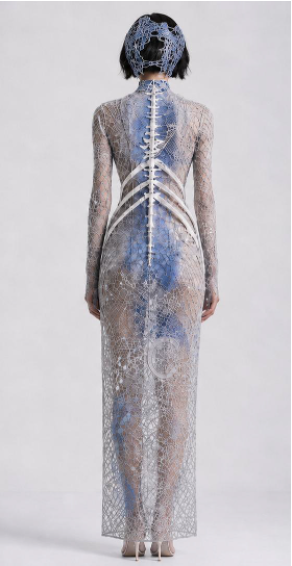
Student proposal 03

Breaking the Frame

Explores female agency through sharp 3D-printed skeletal forms that appear to pierce the qipao from within. Distressed yarn wraps the structure, intensifying rupture and emergence.
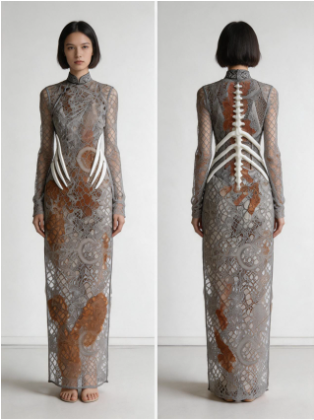
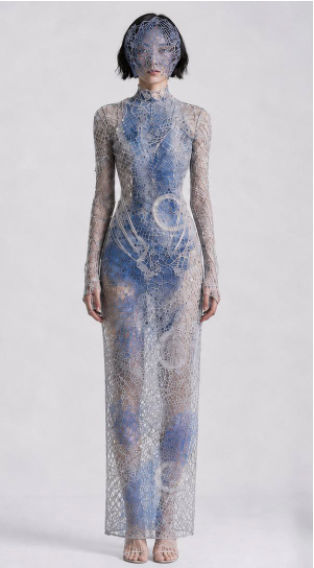
Combined front and back overview of a qipao pierced by skeletal structures
Front view of the Breaking the Frame qipao proposal
Back view showing the skeletal spine and rib structure of the Breaking the Frame proposal

Teaching contribution

AI literacy becomes design capability when control and judgement remain visible.

The course translates open-source model ecosystems into a learnable design language and connects broad AIGC awareness to later physical or digital realisation.

The next iteration will strengthen rubric-based evaluation, student reflection and documentation of how workflow decisions affect design quality.